

Wine Education: The Certification and Beyond
A Non-Exhaustive List of Ways to Learn More About Wine
At some point in your wine journey, the path to education will look like an interstate highway with several exits layered on top of each other. WSET and CMS will come up as the first options. Here at Wineshop Punk, we believe that certifications serve as a fundamental pillar for knowledge. Yet, as anyone may agree, education goes beyond certifications. Whether it’s for career or curiosity, I’ve written a non-exhaustive list of free or low-cost ways to learn more about wine.
Community College Classes
One of the most underrated resources in wine is community college classes. Often taught by premier professionals, they aim to provide world-class curricula at accessible prices. Professor Fred Swan, who created some of the original courses for the San Francisco Wine School, now offers his updated program at Delta Community College in Stockton. Not only has the material been some of the most in-depth I’ve ever encountered, but Fred’s personal knowledge has helped me understand the topics beyond the page. Currently, his classes cover all the fundamentals: sensory evaluation, wine pairings, old and new-world wines, and many more. My favorite has been California Wine, where he goes in depth on each region and we learn about our state’s history while sipping wine. Also, Fred has the best taste in wine. Each class offers a different selection of wines based on the topic. Through Fred’s pick of the Bay Area’s finest retailers, and overall debonair style, we’ve had the privilege to try some of the best each category has to offer.


Napa Valley College also offers one of the best Viticulture and Winery Technology programs taught by a robust team of professionals. This past harvest, I got to attend Intro to Viticulture, taught by Professor Molly Hodgins, veteran Napa viticulturist now focused on building the best wine program California has to offer. Was it easy to finish a full day of harvest and drive four hours for night classes? No, but the lessons learned were priceless. Professor Hodgins leaves no stone unturned, literally and metaphorically, in her goal of providing students with quality-focused viticulture practices she experienced in the field. No glossy terroir terms to be found, you will learn that there’s way more to photosynthesis than what was taught during K12, the vitality of rootstock selection for vineyard quality, and develop a new appreciation for soil science. Her class has officially replaced “mitochondria as the powerhouse of the cell” with “guard cells control the opening and closing of the stomata”. By the end of the semester, Professor Hodgin’s passion for teaching was so infectious that we all left wondering whether we should pursue a burgeoning career in grapevine science.
Capstone California and Trade Associations
For up-to-date, free, and accurate wine region information, look no further than trade associations. The sole purpose of these associations is to inform trade and consumers about their region’s offerings, as certification programs often have informational gaps in markets outside of France and Italy. To make up for it, associations will put together a package of maps, factoids, and producer guides to educate anyone interested in learning more about their region. In my day job at a regional wine association, we regularly host trade from international and domestic markets for multi-day wine tours where somms get to switch into their hiking boots for vineyard trudging with a glass of wine. If you work in or know of an under-resourced wine market, my best piece of advice would be to form a professional organization and reach out to trade associations for educational opportunities. Also, subscribe to their newsletters. Larger regional associations will often hire educators to teach worldwide, and they might offer one in your home market. For more information, I’ve listed a few of my favorite programs below:
Capstone California: One of the best places to access factual resources on California wine, provided by the California Wine Institute. A collaborative effort by a team of domestic and international experts, the program partners with international wine schools to provide the most comprehensive resource hub for all things California wine. (Also a great place for free, detailed maps.)
Wine Australia: funded by grapegrowers and wineries, Wine Australia is the main page for the country’s wine sector. In addition to resource guides, their website provides insights into AgTech, compliance, and global market-ready preparation lists. Last spring, I had the privilege to attend Mark Davidson’s Wine Australia seminar in San Francisco. The seminar took us through a variety of wines and styles, with a comprehensive look at current Australian market offerings. Paired with Mark’s upbeat and enjoyable style of education, I’ve been waiting for my chance to attend another one of his seminars ever since.
Austrian Wine: With Grüner Veltliner on the rise, this is the place where I go to learn more about Austrian varieties like Blaufrankisch and Traminer.
Mendocino Winegrowers Association: Deeply historic and intricately layered, even I get confused sometimes trying to navigate through Mendocino County. Before heading out on your retreat through their winding roads, take a look at their AVA breakdown to learn about their interesting, layered sub-ava regions.
Networking, Mentorship, and the Cold Open
Networking. A dreaded word, but vitally important. Dear reader, if you wince at the thought of attending another networking event, you’ve come to the right blog. We’ve all walked away from a conversation where we cringed at ourselves for missing social cues. But the next time you find yourself in these situations, remember that everyone else is nervous too, and they’re all here with the goal to connect. Last summer, I was lucky to be awarded a scholarship from the Dream Big Darling program to attend their retreat at V6 Ranch in Parkfield, California. Cripplingly shy, they gave me the tools to be more confident through their strength-building retreat. Whether it was horseback riding or listening to badass panels of professional women, the team showed me that everyone’s path to career success is unique. And to achieve your dreams, you need to advocate for yourself. When it’s time to ask for a promotion or personal time, career happiness is achieved when you speak up for yourself.


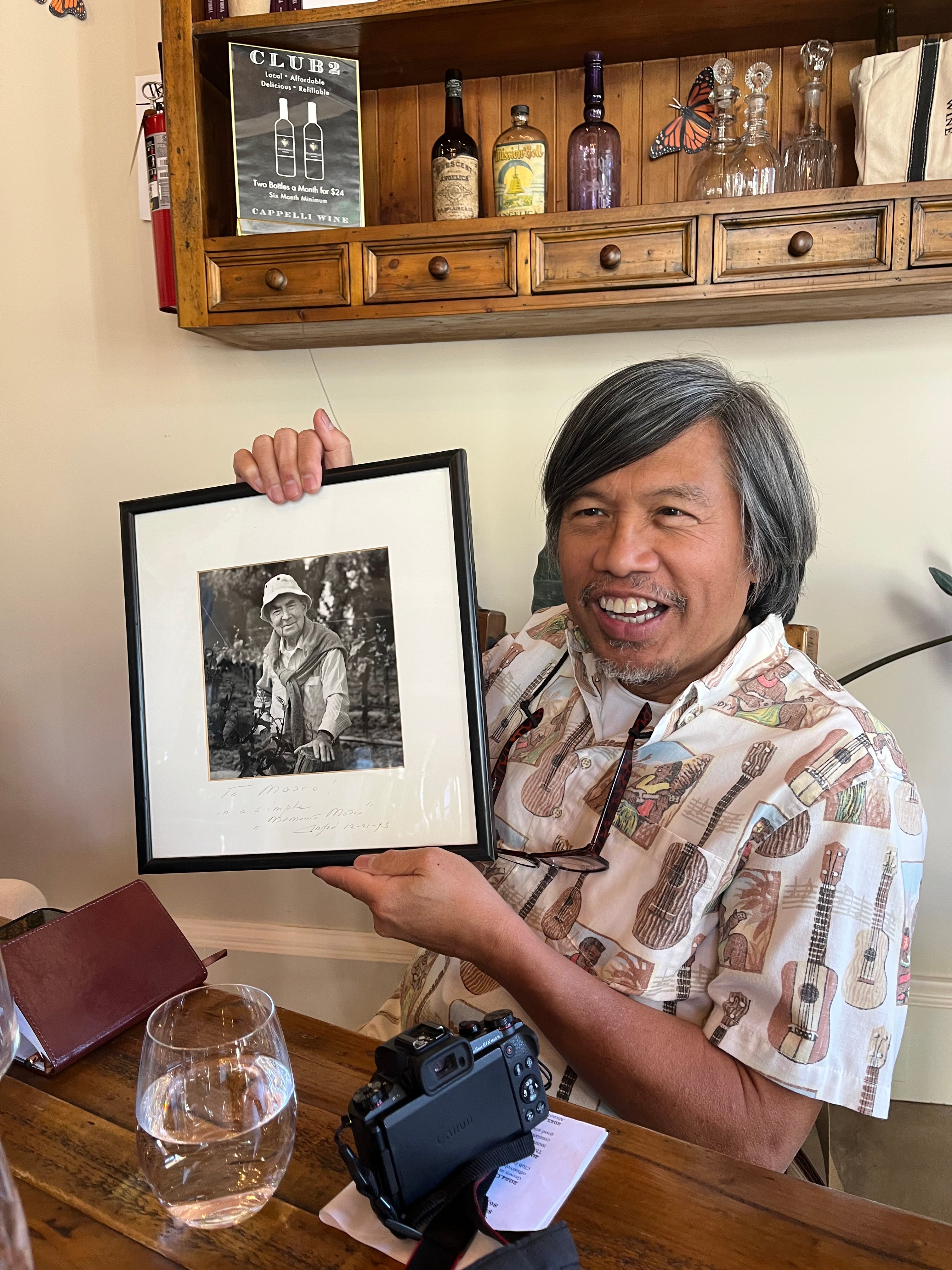
Once you’ve put in the work, mentors will appear. You will find them unexpectedly when accomplishing career milestones. That last bit is key, as I often hear mentors frustrated over mentees who expect to become overnight prodigies. Instead, the relationship mostly involves providing clarity and guidance. Long-time wine professional Randy Caparoso has been one of my most influential mentors. As he puts it, young professionals have to team up with an old fart to learn the ropes. I tell him he’s not old, he looks at me with a “don’t play coy” face because he’s had to do the same thing. Mincing no words, he taught me how to taste sharper, write faster, and stand taller. Because in spite of all the trends you’ll see your peers reach for, Still, one of the most invaluable things he’s taught me is that if you keep strong, you can build a legacy while raising a loving family.
Harvest Internships
Where to start with this one? Winery harvest is not glamorous. Believe nothing you see in the pictures because there will be no round table lunches or high-fiving each other when the bin straps are locked in. A lot of what you see online makes it look like summer camp, and it is very much the opposite. Instead, you will usually find yourself eating a sandwich on a bucket while watching a sticky pumping over. You will probably get sunburnt while sorting grapes, or worse, actually burnt with the steamer. It’s hot, it’s sticky, it hurts. Why on earth do we market harvest to be any more romantic than it is? For all the guts, there is some glory in it. At the end of a long day, it’s nice to feel a sense of accomplishment by the end. Especially when you get to use the early mornings and long days as an excuse to not go out. And if nothing else, the work will make you think twice before badmouthing another wine. Thinking about writing a longer piece on the realities of harvest, if anyone is interested, let me know in the comments!


Certifications Are Still Important
Structured programs still serve as a main pillar of wine education. Both the Wine & Spirits Education Trust and the Court of Master Sommeliers equip students with the fundamentals of wine. The WSET program provides structured materials that guide students through increasingly rigorous levels of knowledge. From beginner basics to the Masters of Wine, their program is straightforward about what they expect you to know. CMS, on the other hand, is more immersive. I opted for the online path to my introductory certification because it was more affordable than the in-person exam and allowed me to take my time to understand the material through hands-on experience. After passing the introductory, I went straight to studying for my certified exam. With a list of examinable items, I’ve completely immersed myself in the experiences I’ve mentioned in this post and more with the goal of one day passing the certified exam.
So, to anyone looking to pass their certifications or learn more about wine, I encourage you to step out of your comfort zone and try out different paths to wine education. Chances are, you might just have fun while doing it.
WSET > CMS. I did CMS first and it was a crash course of 3 months of learning and I laughed when I passed the exam. I enjoyed the WSET more but probably because I had a base knowledge. Wine Folly maps are worth mentioning, they are a great resource, another layer of taking in the information.